
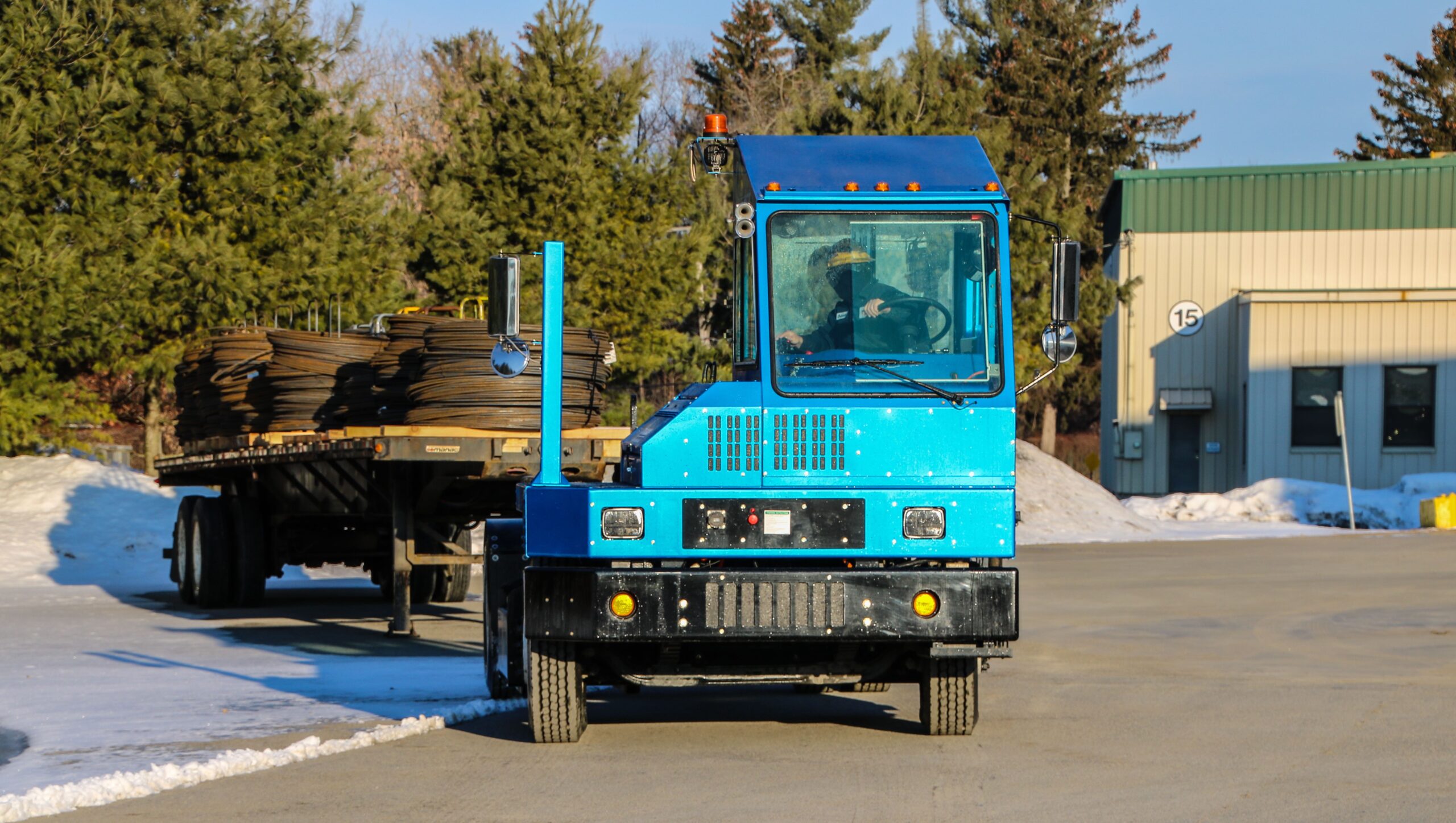
Electric Vehicles Match Diesel Performance in the Cold
As battery-electric vehicles gain popularity for different uses in transportation, some are wondering if they can perform in the cold and harsh environments that diesel vehicles handle well. Just as mileage for conventional vehicles depends on several factors, the range for EVs can vary with cold weather, high-speed driving or accessory use, according to the . Accessory power use for things like heating a vehicle’s cabin can impact the energy consumption and vehicle range for EVs. “Unlike fossil fuel-powered vehicles, the thermal energy available from the electric motor is not able to meet heating demands in winter, and the energy consumption related to heating can significantly affect the vehicle performance in terms of range,” said a done at the University of Brescia in Italy. The study used publicly available Nissan Leaf data to model the impacts of accessory power consumption such as cabin heating on energy consumption for EVs. The data was based on an experiment in which the Nissan Leaf’s range was tested across a broad range of winter ambient temperatures in Canada. The study concluded: “The effect of ambient temperature and the consequent accessories consumption due to cabin heating are shown to be remarkable. For instance, in case of driving cycles, the range exceeds 150 kilometers at 20 degrees C, while it reduces to about 85 kilometers and 60 kilometers at 0 degrees C and minus 15 degrees C, respectively.” That’s the equivalent of going from a range of 93 miles at 68 degrees Fahrenheit to 53 miles at 32 degrees F and 37 miles at 5 degrees F. Of course, this is for a short-range passenger EV. Research on the performance of electric trucks in cold weather is scarce. Terminal tractors, or yard trucks, rarely leave their home base. Yard trucks are the , because they don’t have to travel long distances. They can quickly find a charger when there’s down time or when they need to reenergize their batteries. “The actual performance of our Orange EV yard truck is not any different in hot or cold weather — it just uses more energy in cold weather,” Kurt Neutgens, president and CTO of Orange EV, told FreightWaves. Like any vehicle, EVs need to be designed and adapted for the environments they operate in, Neutgens said, but that can be accomplished. “Because of the additional energy used to heat the battery boxes and the cab, it is possible that operations in extreme cold could use 3 to 6 kilowatts more energy per hour than when temperatures are in the 70s,” Neutgens said. It depends on the temperatures and how efficient the heaters are, he said, so it’s important to test batteries in cold weather and pay attention to the battery pack size companies purchase for their EVs. The Kansas City-based electric terminal tractor provider has had yard trucks operating in snowy and cold environments for years. “Our coldest location is likely in Otsego, Minnesota, at a Ruan facility. In that part of Minnesota, it’s not uncommon to hit minus 20 degrees F for multiple days, and it’s been down to minus 33 degrees Fahrenheit with our truck operating. … The snowiest Orange EV location is likely Buffalo, New York, where our trucks have been operating successfully for five years,” Neutgens said. In the 2018 to 2019 winter season, Buffalo received 94 inches of snowfall, and the average annual snowfall for the city was 70 inches between 1981 and 2010, according to the . Orange EV yard trucks have heating elements inside the battery boxes, so the batteries can continue to supply power and run the truck as normal in frigid temperatures, Neutgens said. Though they can take energy from the battery, electric heaters can heat up the cab faster than a diesel engine, he said. “Any fleet operator considering a switch to electric vehicles has concerns regarding duty cycle and range of the assets. But in the evaluation, they have to also take into account the terrain and weather conditions,” said Tyler Cole, director of carbon intelligence at FreightWaves. Cole continued: “If they’re sacrificing substantial range in extreme temperatures, it’s going to weigh into their asset purchasing decision. For the last mile, light-to-medium-duty trucks and drayage operations, that’s probably less of a constraint. But any long-haul operator looking at EV trucks in the medium term is appropriately weighing the trade-offs between the total cost of ownership and interoperability of its assets.” to extend EV range in the winter include: Because EVs take more energy in cold environments, it’s important for companies to keep a charger open to keep the batteries warm and recharge trucks when needed, Neutgens said. Published: { "@context": "", "@type": "ImageObject", "contentUrl": "", "contentlocation": "United States", "url": "", "name": "Electric yard truck operating in New York", "description": "Electric yard truck operating in New York", "datePublished": "2022-02-16", "provider": { "@type": "Organization", "name": "Orange EV", "url": "", "image": "" } }