
As published in Fleet Equipment.
Rising diesel prices are changing the economics of alternative fuels for fleets, from RNG and propane to electric and hydrogen options.
Still the dominant fuel powering commercial transportation, more than 95% of Class 7 and Class 8 trucks run on diesel, and for many Class 3-6 trucks gasoline also remains a top choice. Recently, however, the effect of geopolitical and economic instability on crude oil supply chains has shown just how highly vulnerable the industries that use trucks are to fluctuations in global energy markets.
Today, tightening inventories have driven fuel prices to unprecedented levels. According to the U.S. DOT Bureau of Transportation Statistics, retail diesel prices have surged almost 80% compared to January 2026, rising from an average low of around $3.50 per gallon at the start of the year to approximately $6.18 per gallon by mid-October.
Increasingly, it is volatility, rather than stability, that is defining diesel markets. As fuel expenditures remain one of the largest and become one of the least predictable operating costs for fleets, transportation companies can look elsewhere for answers. For fleet operators facing relentless pressure to control costs and maintain service reliability, the question may now be whether an alternative to diesel makes sense for their operations.
Renewable Natural Gas
According to research from Energy Vision and the RNG Coalition, the economics of renewable natural gas have improved since diesel prices began their recent climb. Unlike petroleum-based fuels, domestic natural gas prices have remained relatively insulated from international conflicts and oil market disruptions.
The difference has become substantial. As diesel approached $6 per gallon nationally, fleets were paying less than $2.25 per diesel gallon equivalent (DGE) for RNG in California and less than $2 per DGE throughout much of the rest of the U.S. With fuel costs diverging that sharply, the payback period for RNG-powered trucks has shortened considerably.
Class 8 RNG trucks typically carry an upfront premium of approximately $75,000 compared with comparable diesel models. However, fuel savings can offset that quickly. Where RNG is approximately $3.50 per DGE less expensive than diesel, fleets can recover the additional purchase cost in as little as 1.3 to 1.6 years. Even where RNG is only $2 less expensive per DGE than diesel, payback periods are roughly 2.3 to 2.8 years.
The RNG Coalition also points out that RNG trucks can closely match diesel vehicles in range, payload, and duty cycle. For example, a Class 8 tractor with a Cummins X15N engine can provide up to 500 HP and 1,850 lb.-ft. of torque. Equipped with a 175-DGE fuel tank it can travel at least 750 miles and be refueled in 15 minutes or less. Expanded tank configurations can increase range to approximately 1,200 miles while requiring only about 20 minutes for refueling.
Electrification
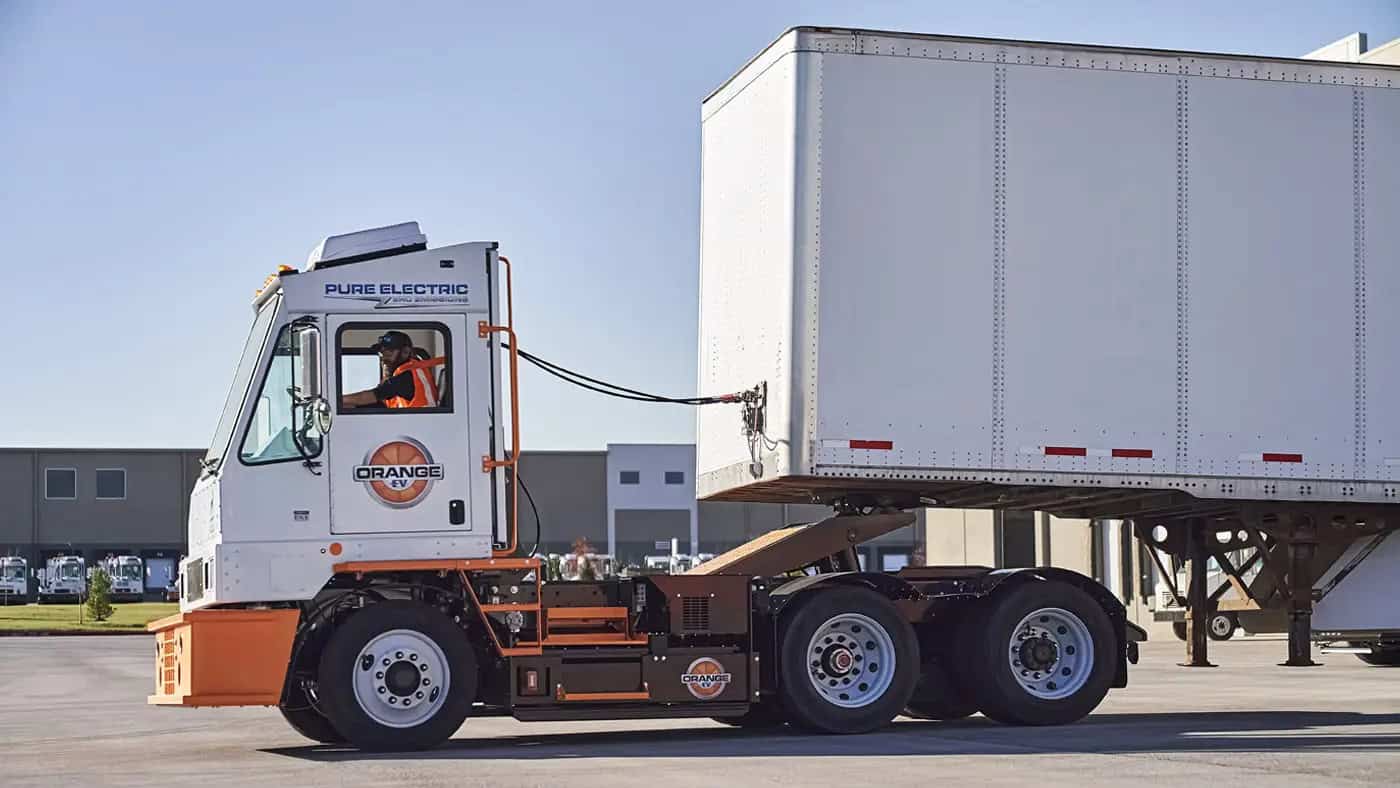
 While long-haul trucking continues to search for an optimal zero-emissions solution, there is a strong business case for electrification of terminal tractors. The economics are compelling because yard trucks operate in controlled environments with predictable duty cycles, and where centralized charging is feasible.
Research from the North American Council for Freight Efficiency (NACFE) shows electric terminal tractors can reduce net energy spending by 75% to 95%. Electric terminal tractor manufacturer Orange EV offers a cost comparison model that demonstrates how sharply the economics improve as diesel prices rise.
For a typical two-shift terminal tractor operating 4,000 hours annually, diesel fuel costs range from $28,000 at $3.50 per gallon to $56,000 at $7 per gallon annually. Electricity costs remain approximately $3,360 annually across all scenarios. At current fuel prices, annual average fuel savings reach $46,240 per truck.
 Adding maintenance savings estimated at more than 50% pushes the total annual savings for an electric terminal tractor to nearly $58,840 per vehicle. With an estimated incremental purchase cost of $150,000, payback is approximately 2.5 years, and under even higher diesel-price scenarios can approach just two years.
Propane Autogas
Among today’s commercially available diesel alternatives, propane autogas offers one of the most straightforward economic propositions. Historically, noted the Propane Education Research Council (PERC), the fuel has cost 40% to 50% less per gallon than gasoline or diesel. In the current market, the gap has widened dramatically.
McAbee Trucking, a Carolina-based postal service contractor with 27 medium-duty trucks, paid less than $2 per gallon for propane autogas during a period when diesel prices nearly doubled. According to the company, propane costs rose by only five cents throughout the entire year.
The economics extend beyond on-road trucks. At West Basin Container Terminal, more than 128 propane-powered terminal tractors operate at a cost of $6.17 per hour compared with $8.14 per hour for diesel units. The result is more than $1 million in annual savings and a 25% reduction in fuel spending.
Market fundamentals suggest propane’s price advantage may continue. Propane inventories in September 2026 stood roughly 22% above the five-year average. While diesel spot prices increased 91% year-over-year and gasoline rose 59%, propane spot prices remained within approximately 3% of year-earlier levels.
Hydrogen
Hydrogen fuel cell electric vehicles are increasingly viewed as a viable long-term component of commercial transportation. The technology that combines electric propulsion with hydrogen-powered electricity generation offers zero tailpipe emissions while preserving operational characteristics. Like diesel trucks, hydrogen-powered Class 8 vehicles can be refueled in roughly 15 to 20 minutes and achieve ranges approaching 500 miles.
Investment in hydrogen-powered Class 8 trucks is ongoing. Hyroad Energy announced an agreement with Toyota Motor North America to deploy 40 hydrogen fuel cell Class 8 trucks in Southern California.
Hyundai is advancing commercial hydrogen trucking through its XCIENT Fuel Cell program. In testing, 63 of the company’s Class 8 fuel cell tractors operating in North America have accumulated almost one million miles of driving since entering service.
Volvo recently began on-road testing of hydrogen combustion engines and plans commercial introduction in Europe before 2030.
There is also growing collaboration among major manufacturers. Daimler Truck, Volvo Group, cellcentric, and Toyota have agreed to cooperate on fuel-cell technology development. The companies plan to combine their expertise in commercial vehicles, manufacturing, and hydrogen technology to accelerate commercialization of fuel-cell systems for heavy-duty transportation.
Multi-Fuel Future
As diesel prices remain elevated and unpredictable, commercial fleets are asking whether fuel diversification is the best choice. While no single answer will serve every fleet or operating profile, the future increasingly appears to include selecting the most appropriate alternative fuel technology based on duty cycle, infrastructure availability, geographic coverage, and total cost of ownership.
What is clear is that the economic calculus has changed. When diesel prices approach and exceed $6 per gallon and remain vulnerable to global disruptions, alternatives once viewed as niche options may offer economic advantages that increasingly make more business sense.
Published: October 26, 2026/Fleet Equipment