About Julie Brooks

This author has not yet filled in any details.
So far Julie Brooks has created 123 blog entries.

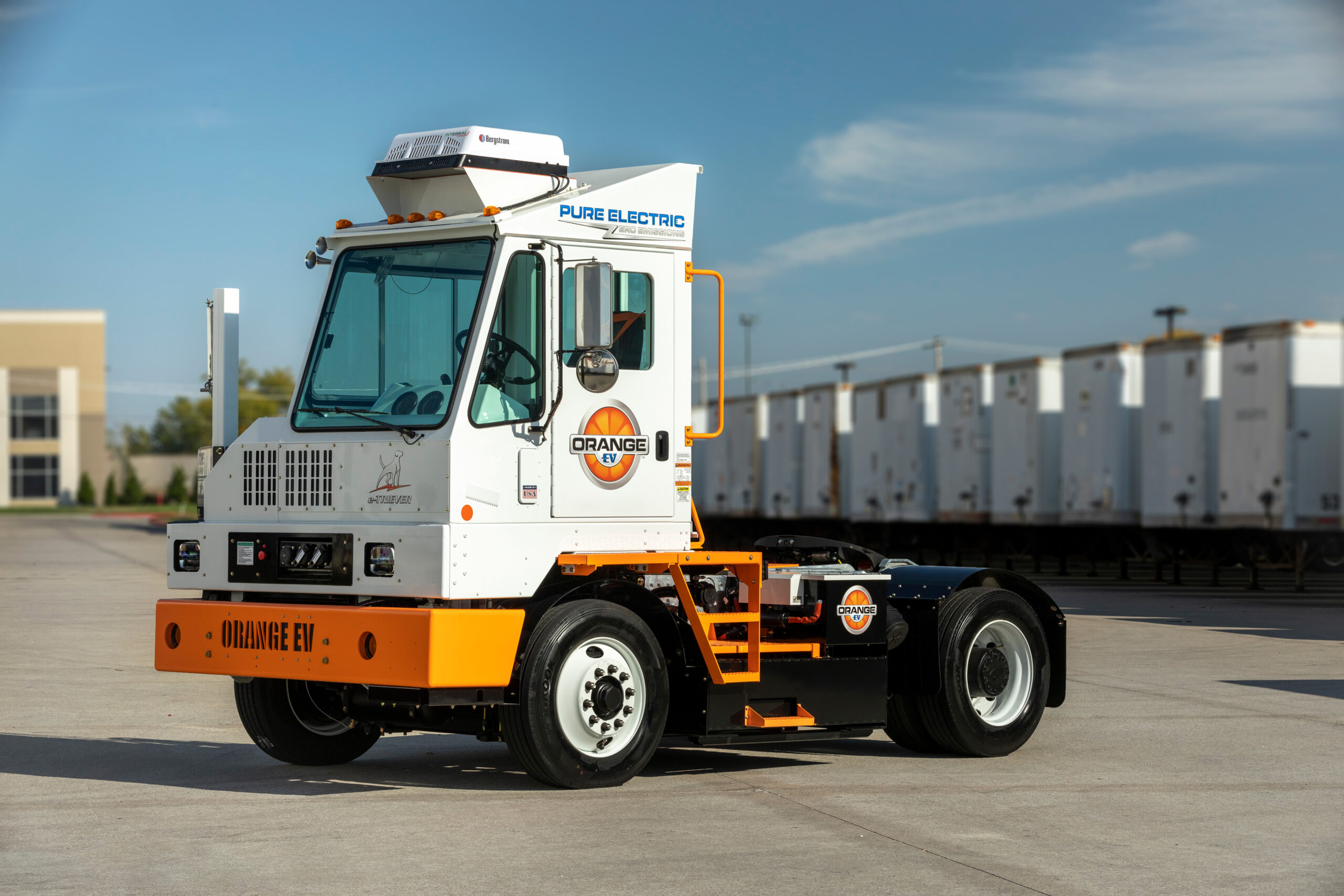
Orange EV Delivers 500th Fully Electric Heavy Duty Truck

2025-10-10T14:45:59-05:00October 25, 2022|Electric Trucking|

, the electric vehicle (EV) industry-leading manufacturer with the most heavy duty zero-emission trucks in operation in the United States, today announced the delivery of its 500th electric yard truck. Founded in 2012 and first deployed in 2015, Orange EV has deployed more yard trucks than all its competitors combined according to CALSTART, a non-profit dedicated to the growth of clean transportation technologies. The 500th Orange EV truck was purchased by United Natural Foods (NYSE: UNFI), the largest publicly traded wholesale distributor of health and specialty food in the United States and Canada. Since its founding in 1976, UNFI has been at the forefront of transforming the food industry through scale, service, and sustainability. The company is adding eight Orange EV trucks to its fleet within the next month. With these additions, UNFI will have 10 Orange EV trucks operating in its U.S. fleet. “Since the first Orange EV trucks were placed in service we have been very happy with the performance, reliability, ROI, and environmental impact they are making,” said Jeff Wismans, National Director of Fleet Operations, at UNFI. “It made it an easy decision to add eight more.” This Orange EV milestone demonstrates the trucking industry’s focus on eliminating diesel fuel and emissions and the significant role yard trucks play in the supply chain and transportation logistics. It comes on the heels of a nationwide, and the announcement of plans to move to a much larger production facility to keep pace with demand. Orange EV yard trucks are now moving goods in 30 states and being operated by more than 140 fleets. “Orange EV’s launch in 2012 with just $50,000 in our coffers was met with a healthy dose of skepticism, but we were determined to prove that zero emission yard trucks are the real deal,” said Wayne Mathisen, Co-Founder and CEO, Orange EV. “With this historic milestone, Orange EV has accomplished the seemingly impossible feat of generating excitement about EV trucks within the commercial trucking space, and we did it by manufacturing trucks that are superior operationally, financially, and environmentally. Our trucks are safer, more reliable, save our customers money vs. diesel, and are preferred by drivers and management alike.” The data shows that yard trucks are one of the fastest converting truck types to fully electric, with Orange EV leading the way. The reasons for this rapid uptake are clear. Orange EV has proven that the financial savings are significant versus diesel fuel and diesel truck repairs, the truck’s reliability and uptime are far superior to diesel versions, and the emissions reductions are a key benefit for drivers and the environment. Over a 15-year lifespan, a Tier 3 diesel engine operating 6,000 hours per year at 2.5 gallons per hour can emit: Orange EV trucks, on the other hand, have zero emissions and use the cleanest, most efficient, and lowest cost fuel source. “The unsung heroes of supply chain and logistics, yard trucks are typically used to move trailers and containers in distribution centers, rail intermodals, ports, and a range of other facilities where uninterrupted movement is mission critical,” said Orange EV Co-founder and CTO Kurt Neutgens. “Orange EV zero-emission trucks do the same work as their diesel-powered counterparts while eliminating the diesel fuel and emissions that are endangering people’s health and our climate. Orange EV was the first in this space and will continue to lead the industry with more innovative offerings that build on the success of our current line of EV yard trucks.” Orange EV, headquartered in Kansas City, MO, is the leading OEM providing industrial fleets with heavy-duty, electric vehicle solutions proven to save money while being safer, more reliable, and preferred by drivers and management. Building both new and re-powered terminal trucks, Orange EV was the nation's first manufacturer offering 100 percent electric Class 8 vehicles to be commercially deployed and scaled. Now in its 10th year of operations, Orange EV's terminal trucks have been chosen by more than 140 fleets across 30 states, Canada, and the Caribbean. Cumulatively, Orange EV trucks have surpassed 6.8 million miles and 2 million duty hours. For more information, visit .
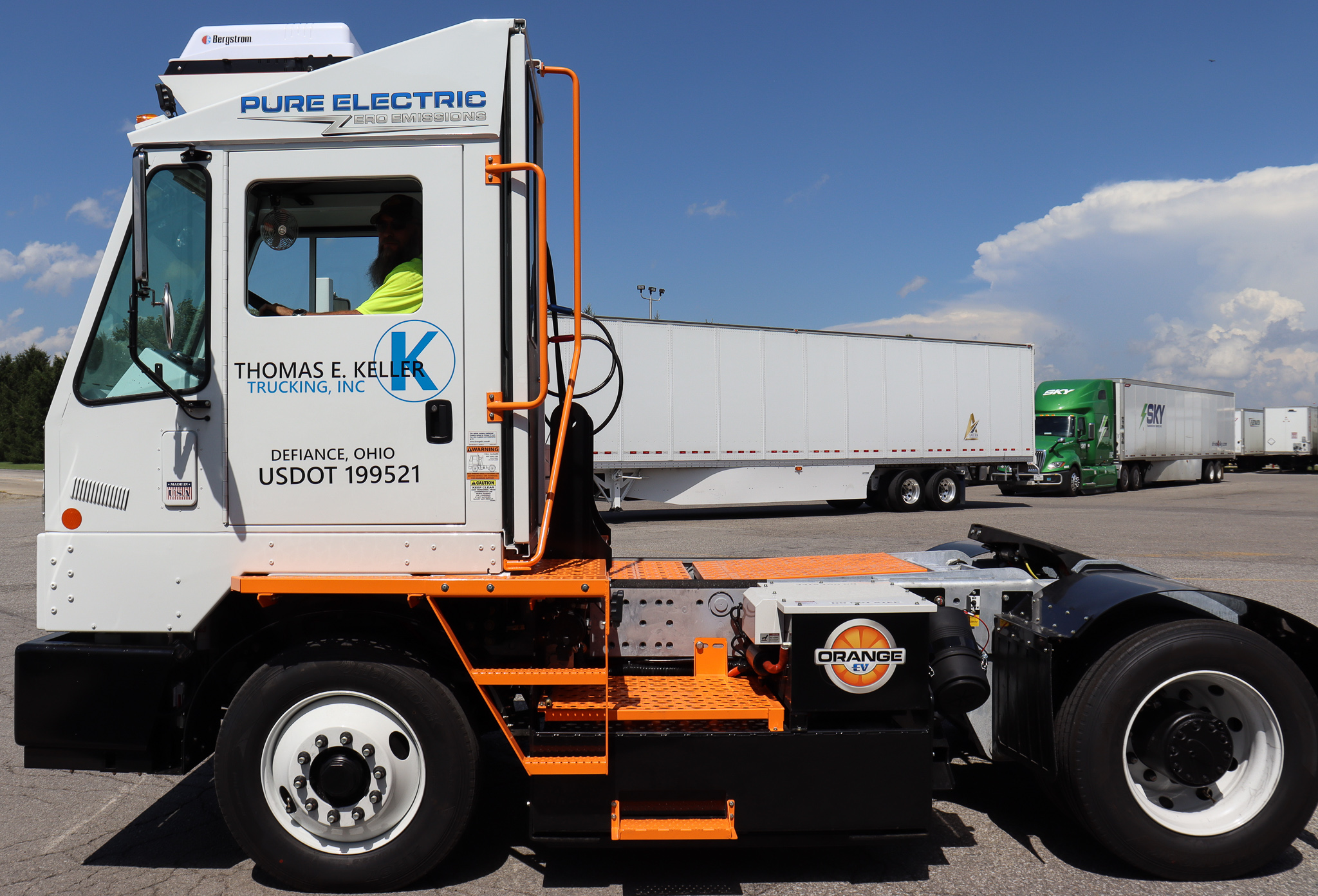
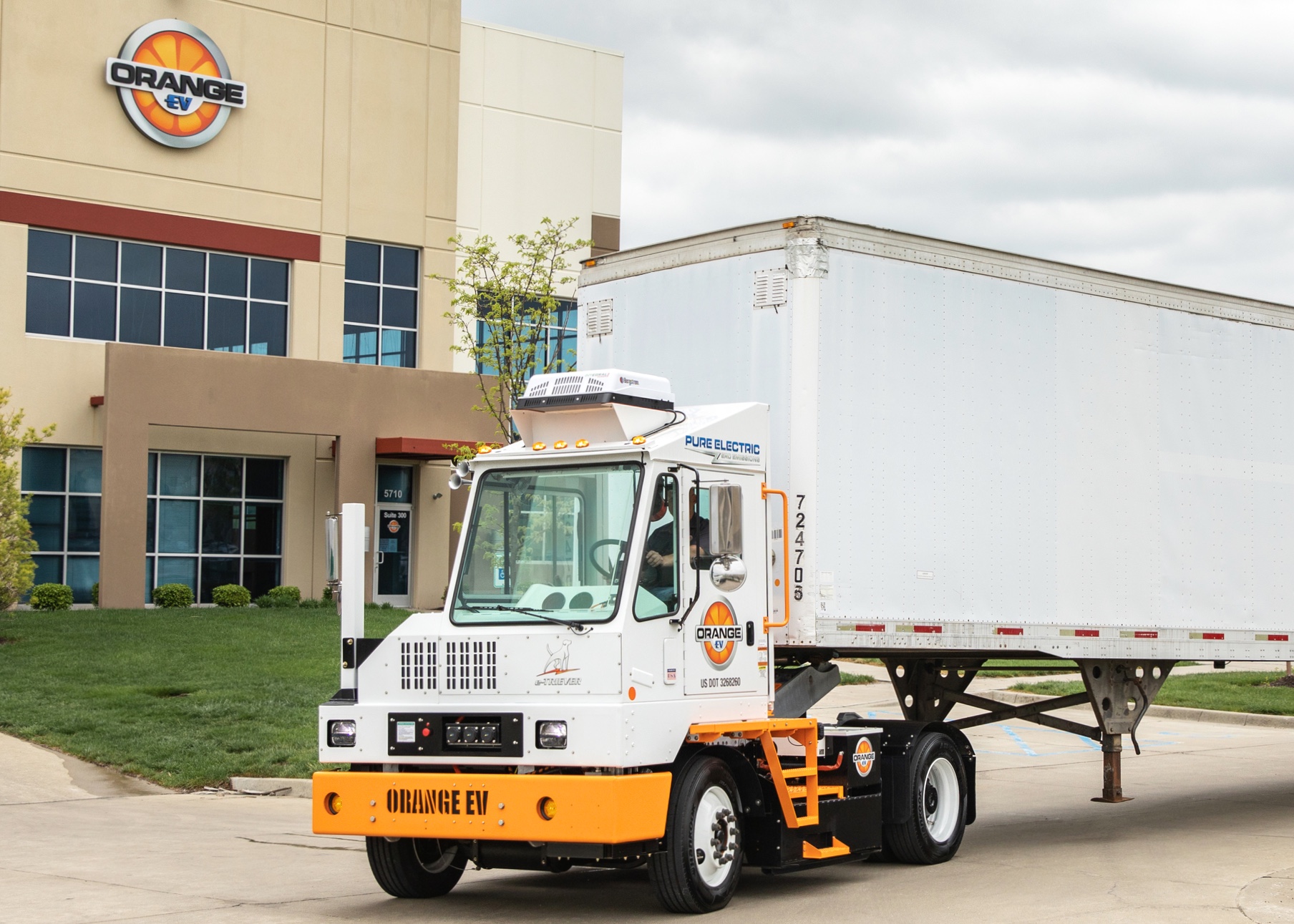
Keller Trucking Optimizes Customer Experience with Orange EV Electric Yard Trucks

2026-01-26T13:29:15-06:00August 30, 2022|3rd Party Logistics|

– Keller Trucking, an award-winning carrier and 3PL provider, today announced the deployment of an Orange EV pure electric yard truck to a food manufacturing operation in Northwest Ohio. With this and planned future deployments, Keller Trucking is advancing their customer-commitment to provide responsive, resourceful, and reliable solutions that increase sustainability, safety, and efficiency.

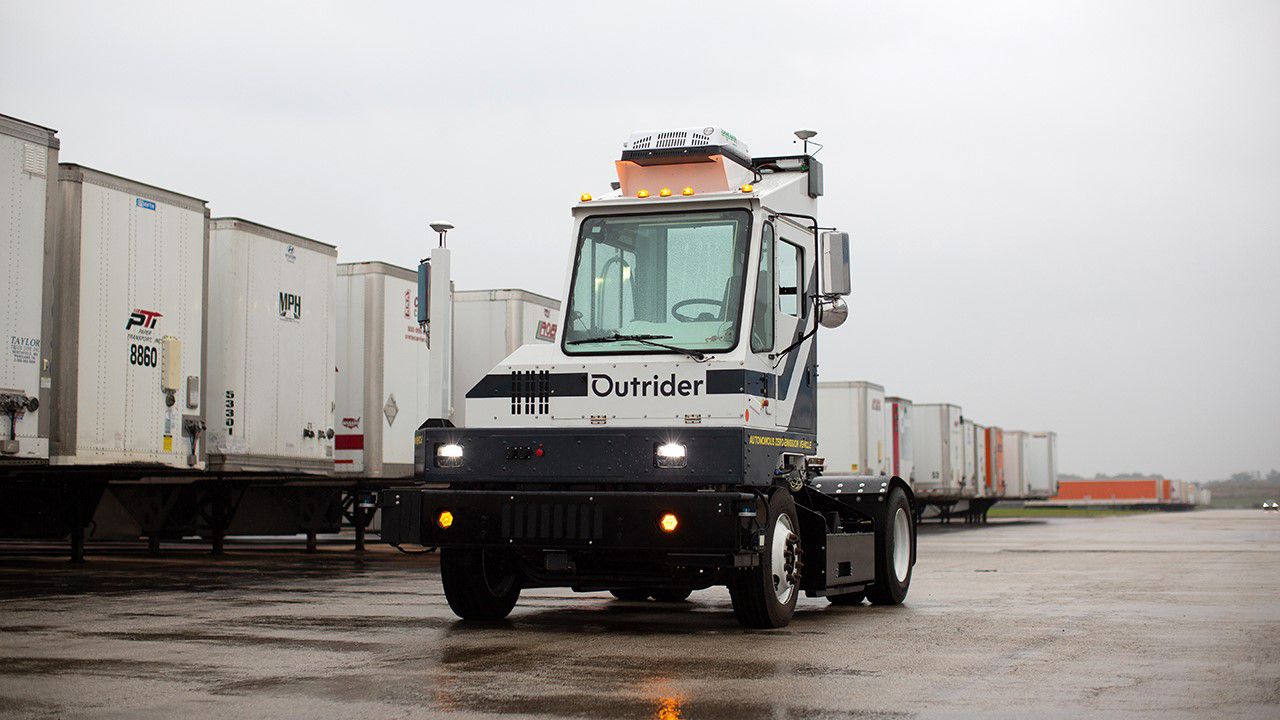
Outrider Scales with Orange EV Autonomous-Capable Trucks

2026-01-27T10:47:11-06:00July 10, 2022|Warehouse & Distribution|

Five-year-old startup Outrider is ready to scale its autonomous approach to logistics hubs, aiming to eliminate freight inefficiency. The Golden, Colorado-based company is releasing a next-generation autonomy kit for yard automation. Over-the-air software updates and the ability to to swap autonomous yard tractors also include remote technical support. “Distribution yards are harsh industrial environments with around-the-clock operations, Andrew Smith, Outrider founder and CEO, said in a . That requires rugged, easy-to-service and remotely supportable products Founded in 2017, Outrider is unique in its focus on automating distribution yards. Partners include . As of November, the Atlanta-based pulp and paper manufacturers had completed more than 1,000 autonomous trailer moves at its Chicago distribution center. Outrider claims its client base represents more than 20% of yard trucks operating in the U.S. NEA, 8VC, Koch Disruptive Technologies, Fraser McCombs Capital, warehousing giant Prologis, Schematic Ventures, Loup Ventures and Goose Society of Texas are Outrider’s backers. It raised $118 million in two funding rounds in 2020. The next-generation autonomy kit includes thefor perception; and an industrial robotic arm from Yaskawa for connecting and disconnecting trailer lines. The autonomy kit is installed and integrated on autonomy-ready Class 8 battery-electric yard trucks. Outrider uses the kit and proprietary software to transform yard trucks into fully autonomous vehicles. The company is working with on a specified autonomy-ready electric yard truck. Outrider and its customers have purchased 24 of these vehicles for expanded customer pilot programs and test operations with the latest autonomy kit. “This is the single largest purchase of Class 8 electric vehicles specifically designed for autonomous yard operations in the industry,” said Tom Baroch, Outrider head of global supply management. “It demonstrates how Outrider will be a catalyst for bringing thousands of zero-emission vehicles into the marketplace,” The company used technical experience gained from more than 12,000 autonomous trailer moves at customer sites and its in Brighton, Colorado, to create the new autonomy kit and drive-by-wire yard truck. The kit addresses common and obscure scenarios encountered by yard trucks in real distribution yards. Outrider automates other manual tasks traditionally performed in the yard — such as ; connecting and disconnecting trailer lines; interacting safely with loading docks; tracking trailer locations; and integrating with supply chain management systems — while centrally managing and monitoring system functions. Fast Company listed Outrider at No. 7 among its top 10 logistics providers in its . Published: { "@context": "", "@type": "ImageObject", "contentUrl": "", "name": "Class 8 Electric Vehicle", "description": "Class 8 Electric Vehicle is outside in Colorado", "provider": { "@type": "Organization", "name": "Orange EV", "url": "", "image": "" } }

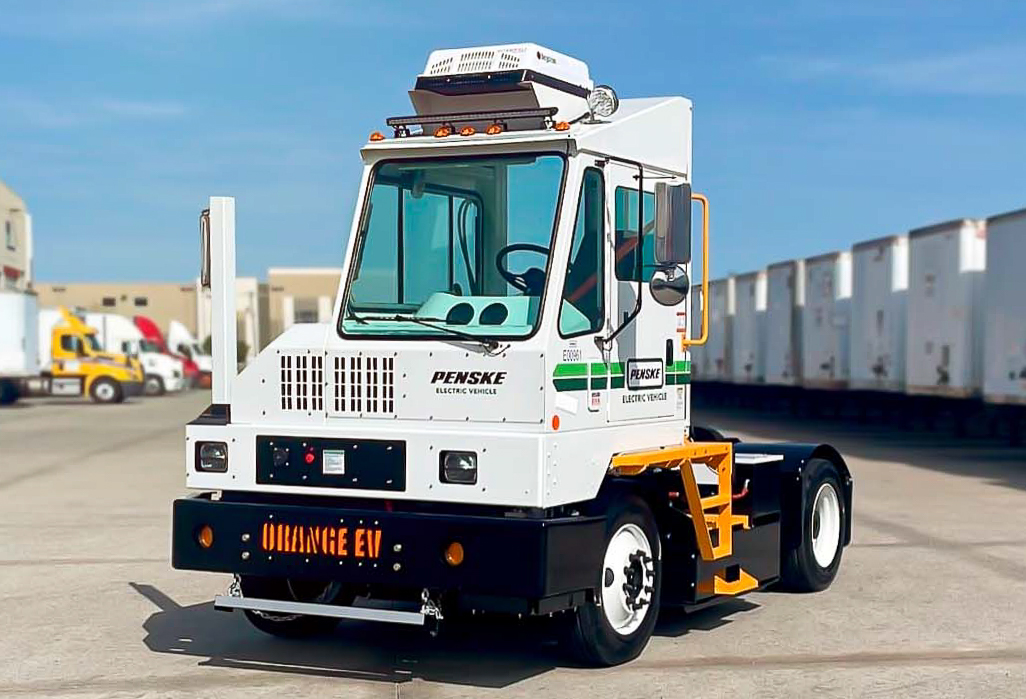
Penske Truck Adds Orange EV Terminal Trucks to Leasing Offers

2026-01-26T12:14:45-06:00May 9, 2022|Truck Leasing|

Penske Truck Leasing is adding Orange EV electric terminal trucks for use with customers across the U.S. The vehicles are designed for trailer-handling operations in truck yards, warehousing and distribution centers, container terminals and related operations where short-distance moves are required. These units will be leased and maintained by Penske. Charging will take place in the customer’s yard, plugging in when the vehicles are not in operation. Paul Rosa, senior vice president of procurement and fleet planning for Penske Truck Leasing explained: “As we continue furthering our relationship with Orange EV and after spending significant time understanding this equipment’s capabilities, we are very pleased to make it a new product offering for our sales force in the U.S. We currently have several customers placing orders for these units and taking delivery of their equipment.” Among the notable features and benefits of the Orange EV trucks are: Wayne Mathisen, Orange EV CEO stated: “Orange EV recognizes Penske’s leadership and is proud to help further their sustainability initiatives. Together we’re helping Penske customers unlock the many benefits of electric by introducing more reliable, cost-effective, zero-emission trucks into their operations.” Penske will display an Orange EV electric terminal truck (and other electric vehicles in its booth) at this year’s Advanced Clean Transportation in Long Beach, California. Published: { "@context": "", "@type": "ImageObject", "contentUrl": "", "contentlocation": "United States", "url": "", "name": "Penske adds Orange EV terminal trucks to offering", "description": "A white yard truck branded Orange EV", "datePublished": "2022-05-09", "provider": { "@type": "Organization", "name": "Orange EV", "url": "", "image": "" } }

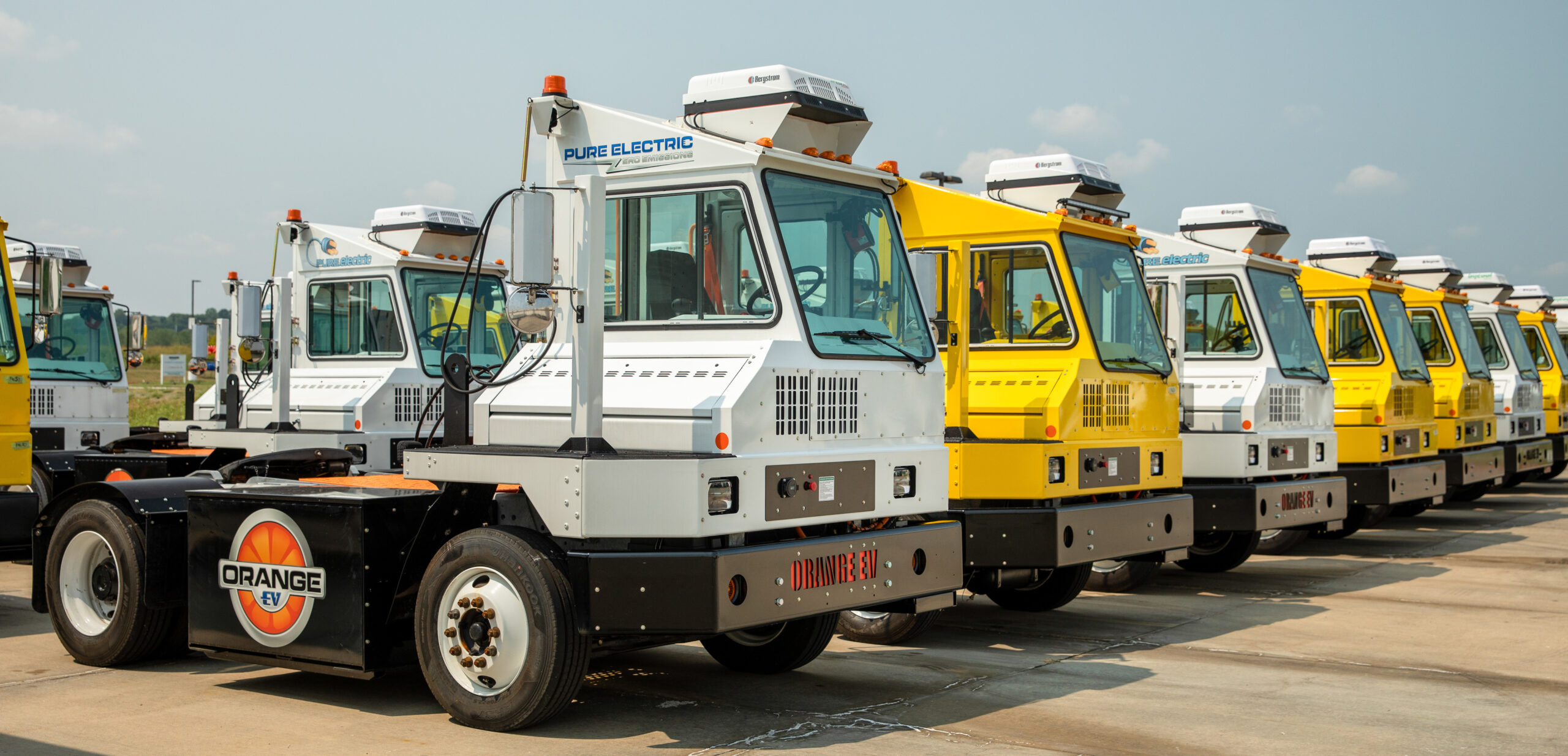
Electric Yard Trucks Are Delivering Lower TCO

2025-10-10T14:40:21-05:00May 2, 2022|Yard Trucks|

While over-the-road heavy duty electric trucks are still being developed, pure electric yard trucks are already ramped up and providing well-established benefits: they’re more comfortable to drive than their diesel counterparts, have lower operating costs, and produce zero emissions. And hard data from these deployments prove that electric yard trucks can pencil out in short order, even without incentives. Yard trucks are generally off-road vehicles that work at speeds under 25 mph moving trailers and shipping containers. These vehicles typically operate within the confines of a yard focused on warehousing, distribution, manufacturing, or intermodal transfer. In these scenarios, diesel yard trucks are particularly inefficient, while the low-speed operation, frequent starts and stops, and close proximity to charging stations are an excellent fit for battery electric yard trucks. Calculating payback speed – the length of time needed to recoup the higher up-front cost of electric over diesel – depends on each fleet’s unique duty cycle and cost structure. The primary variables include: Taking these variables into account, electric yard trucks have already been delivering a lower total cost of ownership (TCO), even at moderate-use sites, and even without incentives. Payback can be three to four years at moderate-use sites and even faster for heavy-use operations. Here’s a simple scenario to illustrate this point: Let’s start with the upfront cost. A fleet can purchase a new Tier 4 diesel yard truck for $120,000, while the cost of an electric yard truck could be $270,000, including charging and infrastructure costs. With the right charger selection, most sites will already have the electrical capacity required for initial electric yard truck deployments, so these locations will require minimal additional infrastructure for charging. The incremental upfront cost of electric over diesel is $150,000 per truck. Now we’ll add the fuel cost. Electricity costs much less than diesel, and EVs are much more energy efficient than internal combustion engines. These advantages result in an 85%-90% reduction in fuel expenses. In a moderate two-shift operation, one diesel yard truck can operate 4,000 hours per year, generating diesel fuel costs of $28,000 (at 1.75 gal/hr and $4.00/gal) compared to an electricity cost of $3,360 for the electric yard truck (at 7 kWh/hour and $0.12/kWh). The fuel savings adds up to $24,640 per year, in favor of the electric yard truck. If we look at a busier use case and more recent diesel prices, such as 6,000 hours per year and $5.50/gallon for diesel in California, the annual fuel cost savings would be over $50,000. Operations like this will see even greater savings and faster payback. , Bolthouse Farms concurrently deployed new electric and diesel yard trucks. This direct, 2-year comparison revealed an 80% reduction in M&R costs with electric yard trucks, generating net savings of $3.15/hour. Sound too good to be true? When you think about where the savings come from, it makes perfect sense: M&R savings for one electric yard truck would equal $12,600 per year at a $3.15/hour reduction over 4,000 hours of operation. Note that this case study used internal labor rates. Where outsourced maintenance costs more, savings will be even greater. Some fleets have reported M&R savings of up to $6.50/hour. In the same case study referenced above, Bolthouse documented a 75% reduction in downtime with electric yard trucks. It’s not uncommon to hear of diesel yard trucks being down 20% of the time, while Orange EV electric yard trucks average just 1-2% downtime. This dramatic reduction in downtime is achieved through a combination of more reliable parts, avoiding repair-prone diesel components, and speedy repairs done on-site using a fleet of mobile service technicians. The direct cost of diesel downtime repairs is captured in the M&R budget, but additional expenses are incurred from lost productivity, late deliveries, and the need to either rent replacement trucks or purchase and manage more diesel trucks than strictly necessary, to cover for diesel yard trucks stuck in the shop. Add to this the many diesel-related costs that are minimized or eliminated with electric: diesel fuel management, emissions- or spill-related fees and fines, hazmat cleanup, liability and workers’ comp claims, etc. These savings can conservatively total at least $10,000 per year, in favor of electric yard trucks. Diesel yard trucks are hard on drivers due to the drivers’ continuous exposure to: All of these impacts are eliminated with electric trucks, increasing driver health and well-being while positively influencing productivity, job satisfaction, and employee retention. Reduced noise and emissions also benefit other site personnel and the surrounding community. These soft dollar savings are real, but harder to quantify, so we’ll leave them out of this simple calculation. In this example, the savings from using electric yard trucks add up to $47,240 per year, giving a payback of 3.2 years for the $150,000 incremental cost. Making small changes to this scenario will increase the savings realized and further accelerate the payback: Of course, this is a simplistic view. From a cost basis perspective, it’s important to factor in asset depreciation and interest, warranties, and site-specific data when available. Will the payback for electric yard trucks be about three years in every case? No. But the savings and benefits are proven and real. Taking the time to run the numbers to guide your decision can result in a competitive advantage, a safer, healthier work environment, and meaningful, measurable steps towards sustainability goals. Even lower-use operations can pencil out, and when budgets don’t have room for the higher up-front cost of electric yard trucks, leasing can be a very helpful solution. Incentives can also help defray costs, but they come with uncertainty, restrictions, and quite often, a long timeline. Competition is increasing for grants and vouchers, and if awarded, fleets may have to wait six months or more to deploy their new trucks, losing out on months of operational savings and emissions reductions. Independent studies also confirm the real-world savings reported by fleets operating electric yard trucks. According to the December 23, 2021 release of “Charging Forward: BEV & FCEV Forecast and Analysis, 2nd Edition” by ACT Research, battery-electric powered yard trucks in 2021 provided a better TCO than diesel-powered versions. Electric yard trucks have proven they can do the job, with over 400 trucks deployed across the U.S. in harsh climates, 24×7 operations, and all sectors of goods movement. Given their compelling benefits and lower total cost of ownership, electric yard trucks are well on their way to becoming the industry standard. The time to switch is now. Published: { "@context": "", "@type": "ImageObject", "contentUrl": "", "name": "Multiple Orange EV Yard Trucks", "description": "Orange EV pure electric yard trucks", "provider": { "@type": "Organization", "name": "Orange EV", "url": "", "image": "" } } { "@context": "", "@type": "WebPage", "mainEntityOfPage": { "@type": "WebPage", "@id": "" }, "headline": "Electric Yard Trucks Are Delivering Lower TCO, Even Without Incentives", "image": [ ], "datePublished": "2022-05-02T12:47:37+00:00", "author": { "@type": "Organization", "name": "Orange EV" }, "publisher": { "@type": "Organization", "name": "Orange EV", "logo": { "@type": "ImageObject", "url": "" } }, "description": "The electrification of the trucking industry is ramping up, and while the prospect of electric over-the-road fleets crisscrossing the nation’s highways is exciting, it’s definitely a work in progress. Many questions remain to be answered including range, charging options, performance in extreme temperatures, battery pack weight, and time required to achieve payback.", "keywords": "Electric Yard Trucks Are Delivering Lower TCO, Electric Yard Trucks, Electric Trucks, Pure Electric Yard Trucks, Yard Truck, Electric Yard Truck, Yard Trucks, diesel yard trucks, electric trucks, orange evelectric vehicle, EV" }

Go to Top